On this episode of Shark Tank Egypt, three founders arrived with concepts that may revolutionize Egyptian innovation, food, and health care. Their pitches focused on fixing actual issues and generating chances for growth both domestically and internationally, not just on numbers.
We witnessed an effort to increase access to healthy food, a daring proposal to produce prostheses and rehabilitation equipment locally, and a forward-thinking approach to agriculture using plant cloning technology for medicinal extracts and essential oils. Each creator had a goal that went well beyond their own company plan; they wanted to transform people’s lives, strengthen communities, and establish Egypt as a pioneer in emerging fields.
This episode highlighted the excitement of Shark Tank Egypt: passion, determination, and negotiations that had the potential to completely alter these entrepreneurs’ futures.
This episode features the following startups: Fit & Fresh, Abdel Aziz El Masry, and El Fares Plant Cloning.
Fit & Fresh
Fit & Fresh provides nutritious and convenient meal solutions for people seeking healthier lifestyles in Egypt’s expanding health meals market. Its mission aligns with rising consumer interest in nutrition and wellness, which has accelerated over the past decade due to global health trends and greater awareness of lifestyle-related diseases. While traditional eating habits remain common, demand for quick and wholesome alternatives is steadily increasing, particularly among the middle class. Studies highlight both the challenge and the opportunity: many Egyptians still consume fizzy drinks and unhealthy snacks several times a week, even though they believe they are in good health and exercise regularly.
The company secured EGP 15 million for 35% equity, along with a 10% management fee. The investment is being directed toward establishing a central kitchen, launching a cloud kitchen, creating a call center to manage orders, and building storage facilities. Fit & Fresh competes with players such as Bar N’ Jar, Flexana, Diet Delight, Lychee, Diet to Door, and Zero Carb Island. To stand out, it introduces creative meal options tailored to different dietary needs and health goals, while strengthening its brand through collaborations with nutrition specialists, wellness advocates, and fitness influencers. A responsive customer service system, personalized meal plans, and an easy-to-use ordering platform further enhance customer experience and loyalty.
The Shark Tank investment opens doors to expanding operations, boosting production capacity, and funding targeted marketing initiatives. Guidance from seasoned investors will help refine the business model and optimize supply chains, while the exposure from the show is expected to significantly increase brand visibility, attract new clients, and build valuable partnerships within the health and wellness community. With these resources, Fit & Fresh is well-positioned to explore international markets and tap into rising global demand, while continuously improving the customer experience through its digital platform and personalized services.
Abdel Aziz El Masry
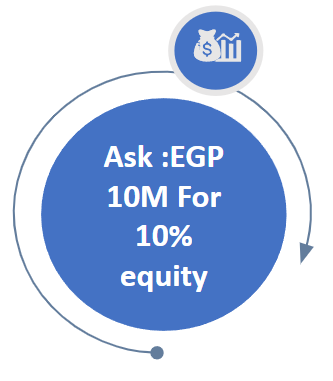
Abdel Aziz El Masry is stepping into a space that is both underserved and full of potential: rehabilitation equipment and prosthetics. With a pitch for EGP 5 million in exchange for 20% equity, the startup is building a future where individuals who need mobility assistance aren’t limited by availability or affordability—and where Egypt can become more than just a consumer in this global industry.
The business offers innovative solutions in mobility aids and prosthetics, addressing the growing needs of people with disabilities in Egypt and beyond. What sets the venture apart isn’t just its product offering, but its strategic vision: moving Egypt from importer to producer and exporter of rehabilitation equipment.
Right now, the global import value of wheelchairs and prosthetic equipment stands at approximately $4.4 million, with Egypt heavily dependent on imports. China leads the way, exporting over $2 million worth of such equipment to Egypt, followed by Germany, the UK, Turkey, and the Netherlands. Egypt’s own export footprint? Just $30,000, recorded from a single shipment to Sudan.
That’s not just a gap but,s a massive market void that Abdel Aziz El Masry aims to fill.
In the MENA region, the contrast is just as stark. The sector sees $89.5 million in imports, but only $2 million in exports. Egypt contributes about 4.9% of those imports—yet 0% of exports. This is a missed opportunity, and one the startup is perfectly positioned to seize.
By developing high-quality, locally manufactured alternatives, Abdel Aziz El Masry has the potential to be the first major exporter of rehabilitation equipment from Egypt. That would not only reduce dependency on foreign suppliers but also establish Egypt as a competitive player in the global medical devices space.
What strengthens this vision is a clear alignment with both market needs and human impact. The demand for advanced rehabilitation solutions is growing—not just because of aging populations and rising disability rates, but also due to increased awareness and advocacy for accessibility and mobility. The startup’s mission to enhance the quality of life for individuals with disabilities fits seamlessly into this broader social and economic shift.
Of course, there are competitors—such as Startup, Medizana, and Bioniclimbs—but few are approaching the sector with the export-focused, Egypt-first mindset that Abdel Aziz El Masry brings to the table. With smart partnerships, a focus on R&D, and potential collaborations with international distributors, the startup could become a catalyst for innovation across the region.
Egypt already has the industrial base, technical talent, and regional trade connections to support a scalable export strategy. What’s needed is leadership—and investment—to turn that potential into action.
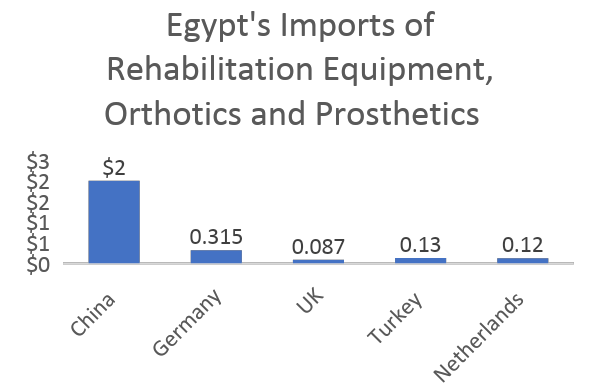
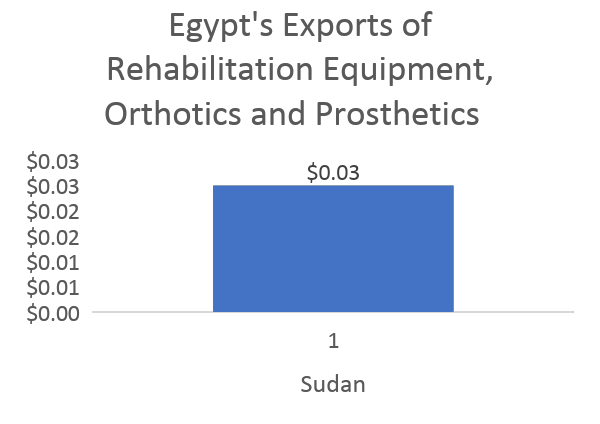
The charts illustrate Egypt’s trade activity in rehabilitation equipment, orthotics, and prosthetics, revealing a significant reliance on imports and minimal export presence. Egypt imports the majority of these products from China, with a value of $2 million, far surpassing other suppliers like Germany ($315,000), Turkey (130,000), the Netherlands ($120,000), and the UK ($87,000). In contrast, exports in this sector are negligible, totaling only $30,000 and directed solely to Sudan. This highlights Egypt’s heavy dependence on foreign suppliers—particularly China—and its limited role as an exporter. The sharp gap between import and export activity suggests opportunities to develop local manufacturing capabilities and gradually reduce reliance on imports.
Al-Fares for Agricultural Development
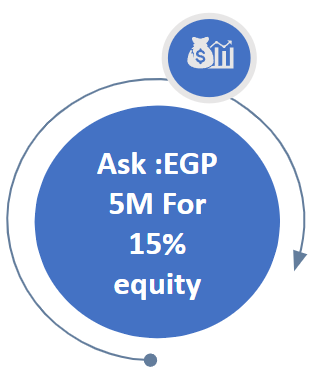
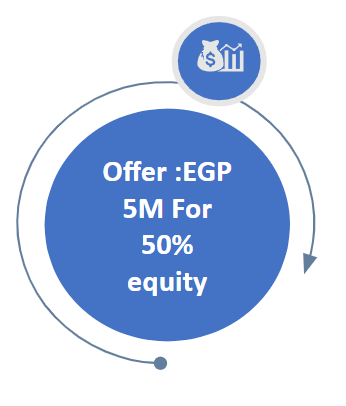
El Fares is bringing a bold, future-forward vision to the rising demand for sustainable, natural products. Using plant tissue culture (plant cloning), the startup produces high-quality essential oils and medicinal materials without relying on resource-heavy agriculture. They initially asked for EGP 5M for 15% equity but secured EGP 5M for 50%, positioning them to scale locally and abroad. With global demand for organic, traceable ingredients rising, El Fares is well-placed to deliver. Plant cloning ensures disease-free, genetically identical plants with consistent potency—an efficient and eco-friendly process.
In a market where Egypt imports far more than it exports in oil and medicinal plants, El Fares can reduce dependency while boosting exports. Across MENA, imports exceed $11.7B, yet exports are just $1.6B—an opportunity Egypt, and El Fares, can seize. Beyond essential oils, Egypt already has a positive trade balance in live plants and ornamentals, a $600M+ MENA market with room for growth. El Fares could expand into climate-resilient ornamental plants for landscaping and urban greening. Though competition exists, El Fares holds an edge with its regional roots, biodiversity, and strategic location. Backed by new funding, it’s poised to become a regional leader in sustainable plant-based production—reshaping how oils and medicinal materials are grown and sourced in MENA and beyond.
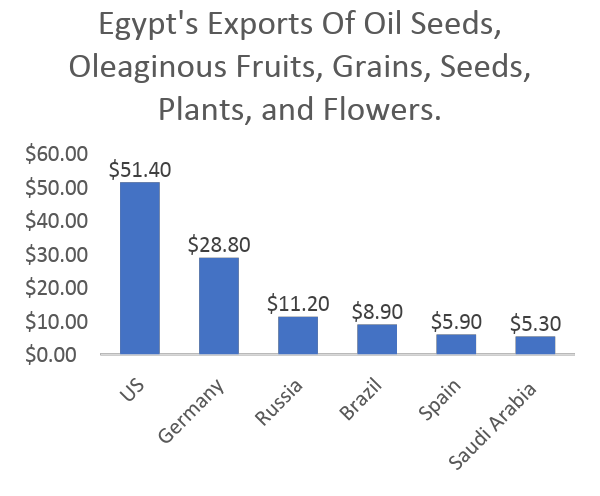
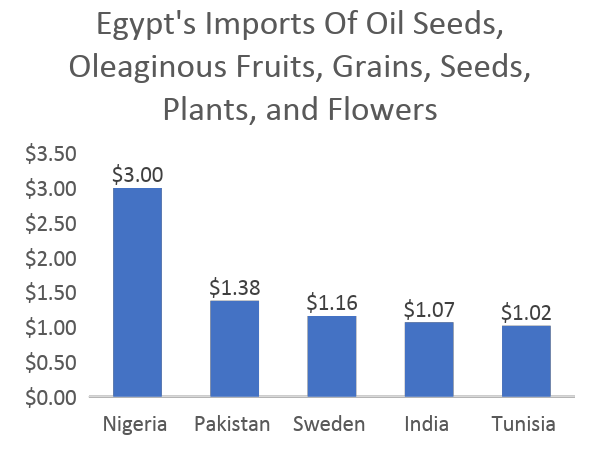
Egypt’s business in oil seeds, oleaginous fruits, cereals, seeds, plants, and flowers shows that its exports have performed well in comparison to low imports. The United States ($51.4 million) and Germany ($28.8 million) account for the largest share of Egypt’s exports in this area, with smaller volumes going to Russia, Brazil, Spain, and Saudi Arabia.
In contrast, imports are relatively low, led by Nigeria at $3 million, followed by Pakistan, Sweden, India, and Tunisia, each contributing between $1 million and $1.38 million. This suggests that Egypt is a net exporter in this agricultural sector, with strong trade ties to Western markets and only limited reliance on a diverse group of import partners.