
In this comprehensive blog series, we delve into the captivating world of startup pitching by closely analyzing “Shark Tank Egypt.”
A global representation of investment opportunities and startups, Shark Tank provides prospective business owners with an essential platform to present their creative concepts and endeavors to a panel of potential investors. The goal of this series is to evaluate and analyze the pitches given by the participating startups, paying particular attention to their funding results, investment requests, and valuations.
Our in-depth review of “Shark Tank Egypt,” Season 3, which premiered in October 2024, is now available for the first episode. This builds on our successful analysis of Season 1 (which aired in January 2023 and featured 43 startups with 25 (58%) receiving offers and 21 (49%) accepting) and Season 2 (which launched in October 2023, showcasing a significant 45% increase in participation with 62 projects, where an impressive 51 (82%) received investment offers, with only 9 projects declining).
We’re thrilled to see the newest generation of entrepreneurial efforts, and the spirit of invention is still very much alive.
Our focus on Season 3 will concentrate on conducting an in-depth industrial analysis of each startup featured on “Shark Tank Egypt season 3”. While our previous analyses of both seasons provided foundational insights into valuation, investment asks, and business models, we are now undertaking a more granular approach. This extended series will feature a detailed and in-depth industrial analysis of each startup showcased on “Shark Tank Egypt.”
This comprehensive analysis will cover topics such as the startup’s nature, the competitive environment, prospects for expansion, the size of the home and foreign markets, and export possibilities. As we shed light on the tactics and insights gained from these business ventures, we hope to provide important advice that will clarify and uncover new business opportunities for aspiring entrepreneurs in Egypt and globally.
Season 3, Episode 1 features Al Ahram, Duaya, and Curl It.
Kicking off the new season with one of the most famous yet oldest legacies in the cookware and aluminum industries — Al Ahram Aluminum and Cookware.
Al Ahram Cookware
Al Ahram Cookware is a manufacturing and retail company, with its main markets spanning Egypt, the Middle East, and Southern Europe. Established in 1963 in Alexandria, Egypt, the company began as a small factory producing bright aluminum cookware. Today, it stands as one of the largest Egyptian manufacturers in the cookware sector.
Al Ahram appeared on Shark Tank seeking an investment of 80 million EGP in exchange for 30% of the company to support the production of a new product line, COOKITO.
They left the show with a deal from Ahmed Tarek: a 40 million EGP investment for 30% equity, with a convertible debt over three years in case the investment is not returned.
The Egyptian cookware market has witnessed strong growth, driven by increased domestic manufacturing and government infrastructure investment, which has attracted international brands to operate locally. Consumer preferences are evolving towards more innovative and health-conscious cooking tools. Additionally, sustainability is a growing priority, with manufacturers focusing on eco-friendly solutions.
The market for aluminum cookware in Egypt is expanding steadily due to factors such as growing urbanization, changing consumer tastes toward healthier lifestyles, and rising demand for reasonably priced, high-quality cooking equipment. A notable disparity between imports ($41.3M) and exports ($16.9M) persists despite robust domestic demand, underscoring the opportunity for regional producers such as Al Ahram to increase their market share.
There is a considerable opportunity for regional export expansion since Egypt only accounts for 6.14% of the $276.25 million in cookware imports in the larger MENA region in 2023. Cookware that is modern, non-toxic, and aesthetically pleasing is preferred by consumers, and online retailers like Jumia and Noon account for a greater portion of sales. In the meantime, as regional companies look for reliable, reasonably priced substitutes for global names, trade agreements like GAFTA and Egypt’s domestic manufacturing incentives foster a favorable climate for market expansion.
The initial request was for EGP 80M in exchange for 30% equity. However, the terms were revised to EGP 40M for 30% equity, with an additional EGP 40M structured as debt to be repaid within 3 years. The debt will carry an interest rate within a specified corridor, +2% will be applied. In case of any default on the debt, it will be converted into equity, with the valuation determined at the settlement date. This adjustment was made primarily to take advantage of tax benefits.
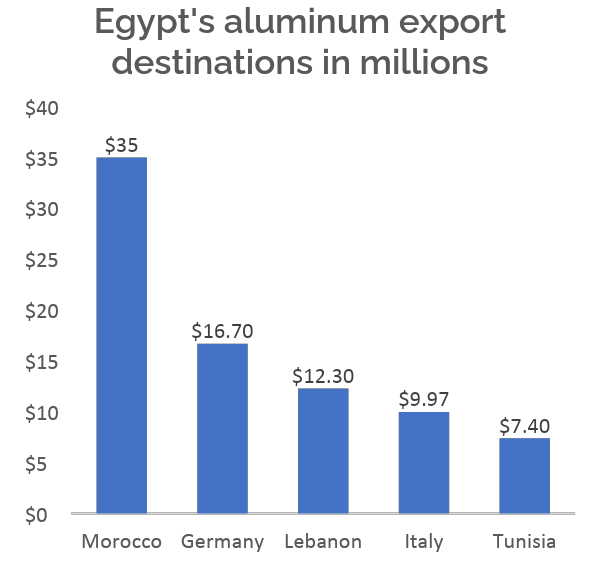
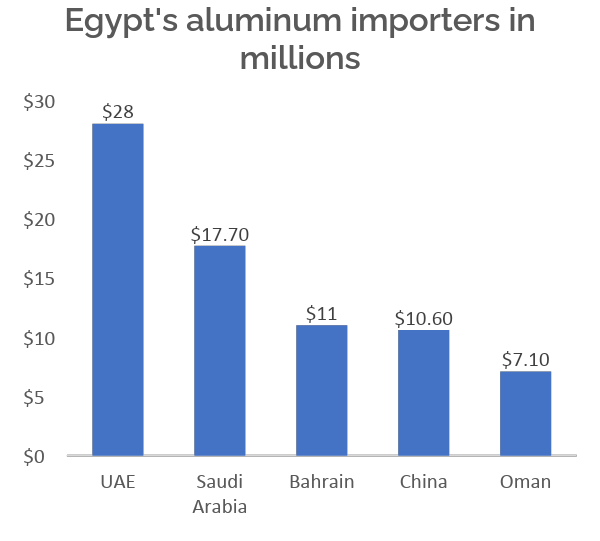
In 2023, Egypt’s total value of aluminum exports amounted to ($106 million). The top five export destinations were Morocco, which received ($35 million) worth of aluminum, followed by Germany with ($16.7 million), Lebanon with ($12.3 million), Italy with ($9.97 million), and Tunisia with ($7.4 million.) On the import side, according to Trading Economics, Egypt imported aluminum valued at $81 million in the same year. The main countries exporting aluminum to Egypt were the United Arab Emirates ($28 million), Saudi Arabia ($17.7 million), Bahrain ($11 million), China ($10.6 million), and Oman ($7.1 million).
Duaya
Moving on with our second project — Duaya for Pharmaceuticals and Healthcare Products, a pioneering force in digital health across the Middle East. More than just a marketplace, Duaya is building the infrastructure for how businesses in healthcare source, manage, and distribute pharmaceutical and medical products.
Duaya entered Shark Tank asking for EGP 12.5 million in exchange for 15% equity. The negotiations concluded with an offer of the full amount — but at 27% equity, in addition to a 10% management fee. A bold move, but a smart one, considering the market opportunity Duaya is tapping into.
Duaya offers an all-in-one digital platform tailored for B2B healthcare needs, combining intuitive digital ordering, real-time inventory management, and access to a vetted supplier network with custom solutions that streamline procurement processes for clinics, pharmacies, and healthcare providers. Its platform organizes products into five key categories—medical supplies, pharmaceuticals, diagnostic equipment, personal care products, and medical devices—making procurement both efficient and user-friendly.
As Egypt’s health tech sector gains momentum post-COVID, with startups like Pharma Marts, Vezeeta, Chefaa, Yodawy, Reme-D, LOMIXA, and CliniDo leading innovation across telehealth, diagnostics, and ePharmacy, Duaya distinguishes itself by focusing on B2B digital procurement. Rather than serving individual patients, it transforms backend operations for businesses in the healthcare space.
Backed by a strategic investment of EGP 12.5 million, Duaya is poised to expand its technology and supplier base, positioning itself as a key player in the region’s evolving medical supply chain.
Its future success will hinge on forming local manufacturing partnerships, enhancing the platform experience, and maintaining strong ecosystem relationships—ensuring it not only meets growing demand, but also sets new standards for digital efficiency in healthcare delivery across the Middle East.
Curl It
Our last and final project for episode 1 is Curl It, a company that is embracing Egypt’s growing natural and organic haircare market. Their original ask was 2 million EGP for 20% stock; however, the negotiations ended with a significantly bigger agreement:
5 million EGP for 50%, with a 30% dilution based on predetermined or chosen KPIs.
A definite vote of confidence in the brand’s ability to dominate a very specific but rapidly expanding market: curly and wavy hair care. The agreement also includes 5% royalty and 5% management fees.
It is anticipated that Egypt’s haircare industry will expand by 6.06% a year until 2029, reaching $1.17 billion in 2024.
The secret of Curlit’s success is its uniqueness. The brand addresses a significant market need by concentrating just on curly and wavy hair, providing focused solutions amidst a plethora of generic alternatives. Curl is poised to transform its curl-focused mission into a scalable, competitive business by increasing production, investing in innovation, and growing its local and regional footprint with new finance and a clear objective.
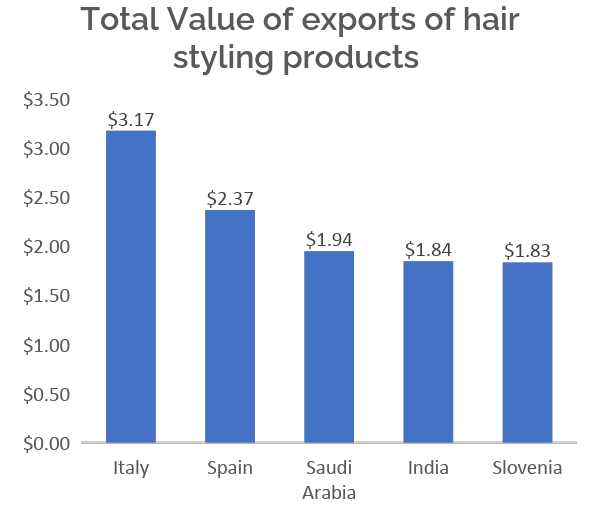
Hair styling items worth $27.4 million were imported by Egypt in 2023, primarily from Saudi Arabia, Italy, the United Arab Emirates, Spain, and India. February 2024 had a 580% year-over-year surge in product shipments, despite a 23% fall in annual imports, indicating underlying consumer demand. Egypt exported goods valued at $78 million, with commerce with Saudi Arabia and the United Arab Emirates accounting for the majority of this total. Egypt contributes 6% of exports but just 1.05% of imports, indicating unrealized potential in the MENA area, which has $2.6 billion in total imports and $1.3 billion in exports.
The secret of Curlit’s success is its uniqueness. The brand addresses a significant market need by concentrating just on curly and wavy hair, providing focused solutions amidst a plethora of generic alternatives. Curl It is poised to transform its curl-focused mission into a scalable, competitive business by increasing production, investing in innovation, and growing its local and regional footprint with new finance and a clear objective.
In 2023, Egypt imported over $27 million worth of hair styling items, according to Trade Map, Trading Economics, and the World Bank. In comparison, during the same time period, the nation’s exports of hair styling goods were about $78 million. With export values over three times larger than its imports, Egypt is positioned as a moderate regional net exporter, demonstrating its expanding significance in the regional haircare market.
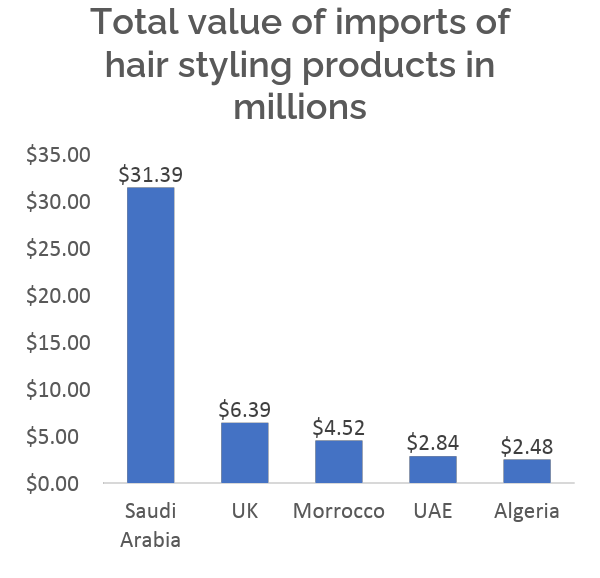
Saudi Arabia was the largest importer of hair styling products in 2023, with a total value of $31.39 million, according to Trade Map and the World Bank. The United Kingdom ($6.39 million), Morocco ($4.52 million), the United Arab Emirates ($2.84 million), and Algeria ($2.48 million) are other important importing nations.
With a $3.17 million total export value, Italy was the top exporter, followed by Saudi Arabia ($1.94 million), India ($1.84 million), Slovenia ($1.83 million), and Spain ($2.37 million).